

What Is a Digital Thread in Digital Engineering and MBSE?

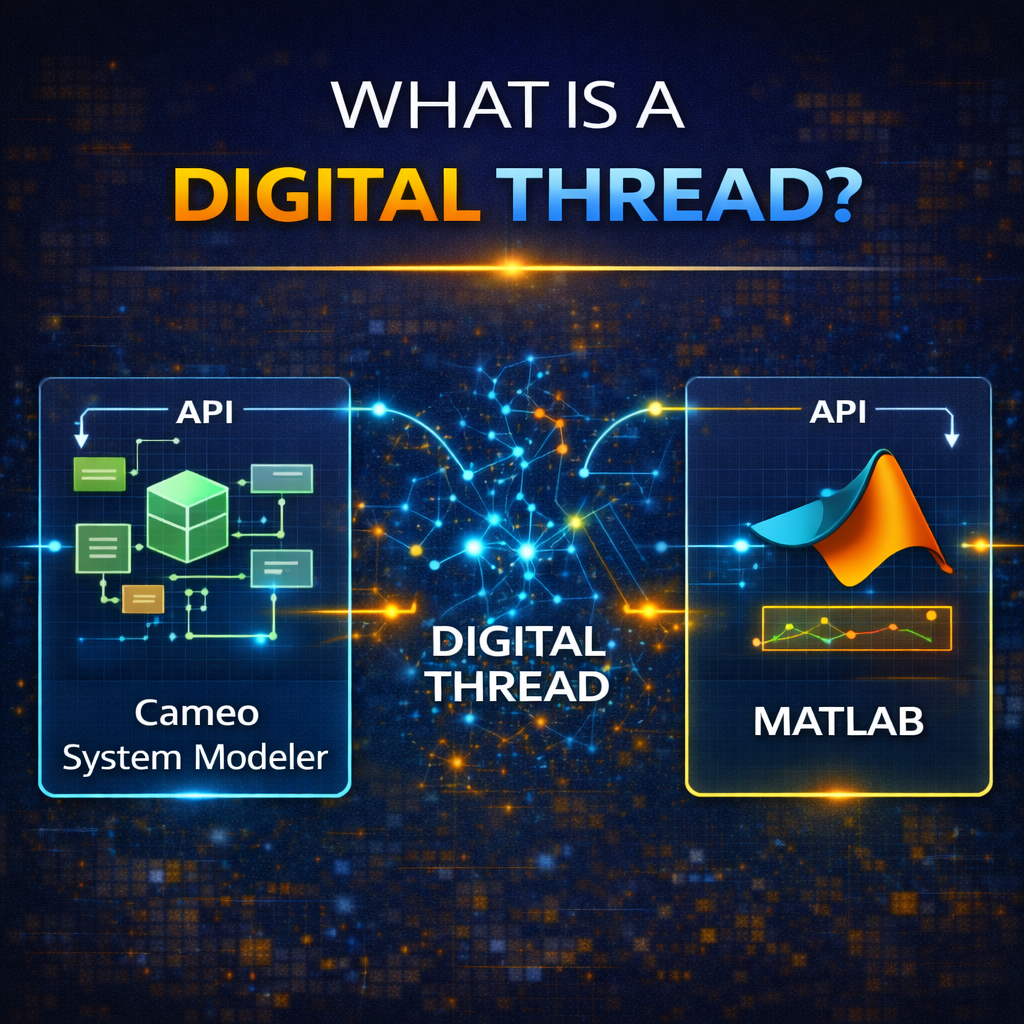
What Is a Digital Thread?
A digital thread is the connected flow of digital information across the entire lifecycle of a system or product. It links models, engineering tools, processes, and data so that information can move seamlessly between different stages of development.
In simple terms, a digital thread creates an end-to-end digital representation of a system’s lifecycle, connecting people, tools, and data across the engineering value chain.
Instead of storing information in disconnected documents and isolated software tools, a digital thread allows data to be shared, updated, and traced automatically across systems.
This enables organizations to maintain a single source of truth for engineering data while improving collaboration, traceability, and decision-making.
Digital Thread in Digital Engineering
Digital threads are a key concept within digital engineering environments.
They allow engineering teams to connect information across different lifecycle phases such as:
-
concept development
-
system architecture design
-
detailed engineering
-
simulation and analysis
-
manufacturing
-
testing and verification
-
operations and sustainment
Because information flows between these stages digitally, engineers can better understand how decisions made early in the lifecycle affect downstream outcomes.
Digital Thread Example in MBSE
In Model-Based Systems Engineering (MBSE), a digital thread often connects multiple engineering tools together.
For example, consider a connection between:
-
Cameo Systems Modeler
-
MATLAB
In this scenario:
-
A system model in Cameo sends input parameters to MATLAB.
-
MATLAB executes a simulation or mathematical solver using those inputs.
-
MATLAB returns computed outputs back to the system model.
Once this integration is established, data can automatically flow between the tools. Engineers can run simulations directly from the system architecture model without manually copying and pasting data.
This connection between tools is an example of a digital thread, where data is exchanged through mapped parameters between software systems.
How Digital Threads Work
For a digital thread to function correctly, systems must be able to exchange data through well-defined parameter mappings.
These mappings define how:
-
inputs from one tool connect to another tool
-
outputs are returned back to the originating system
-
data remains synchronized between systems
Digital threads can operate through:
-
automated integrations
-
APIs between tools
-
model-based integrations
-
workflow automation platforms
The key requirement is that variables and parameters between tools are correctly mapped and compatible.
Benefits of Digital Threads
When properly implemented, digital threads provide significant advantages for engineering organizations.
Single Source of Truth
Engineering data can be centralized and synchronized across multiple tools, reducing inconsistencies between documents and models.
Improved Collaboration
Digital threads allow engineers from different disciplines to work from connected data rather than isolated files.
Lifecycle Traceability
Organizations can trace how requirements, designs, simulations, and verification results relate to each other across the lifecycle.
Faster Engineering Iteration
Changes made in one system can propagate automatically to connected tools, reducing manual updates and accelerating design iterations.
What It Takes to Implement a Digital Thread
Successfully implementing a digital thread requires more than simply connecting tools. Organizations must establish several foundational elements.
Lifecycle Understanding
Teams must clearly define the product lifecycle and identify where data should flow between tools and processes.
Authoritative Source of Truth
Organizations should maintain a trusted authoritative source of engineering data, ensuring consistency across the toolchain.
Secure and Accessible Data
Engineering data must be protected while still remaining accessible to stakeholders across the organization.
Integrated Engineering Tools
Digital threads rely on integration technologies that allow tools to exchange data automatically.
These integrations may include connections between:
-
MBSE modeling tools
-
simulation platforms
-
requirements management tools
-
CAD systems
-
PLM platforms
Digital Thread and Digital Twin
Digital threads are often closely associated with digital twins.
A digital twin is a virtual representation of a physical system, while the digital thread provides the data connections that keep that representation updated across the lifecycle.
Together, these technologies allow organizations to maintain continuous visibility into system performance from design through operation.
Final Thoughts
A digital thread connects engineering data across tools, models, and lifecycle stages, enabling organizations to move away from document-based processes toward integrated digital engineering environments.
By linking system models, simulations, requirements, and analysis tools, digital threads allow engineers to make better decisions, improve collaboration, and accelerate system development.
In modern Model-Based Systems Engineering (MBSE) environments, digital threads are a foundational capability for building scalable digital engineering ecosystems.