
Tool Classes in a Digital Engineering Environment

Tool Classes in a Digital Engineering Environment
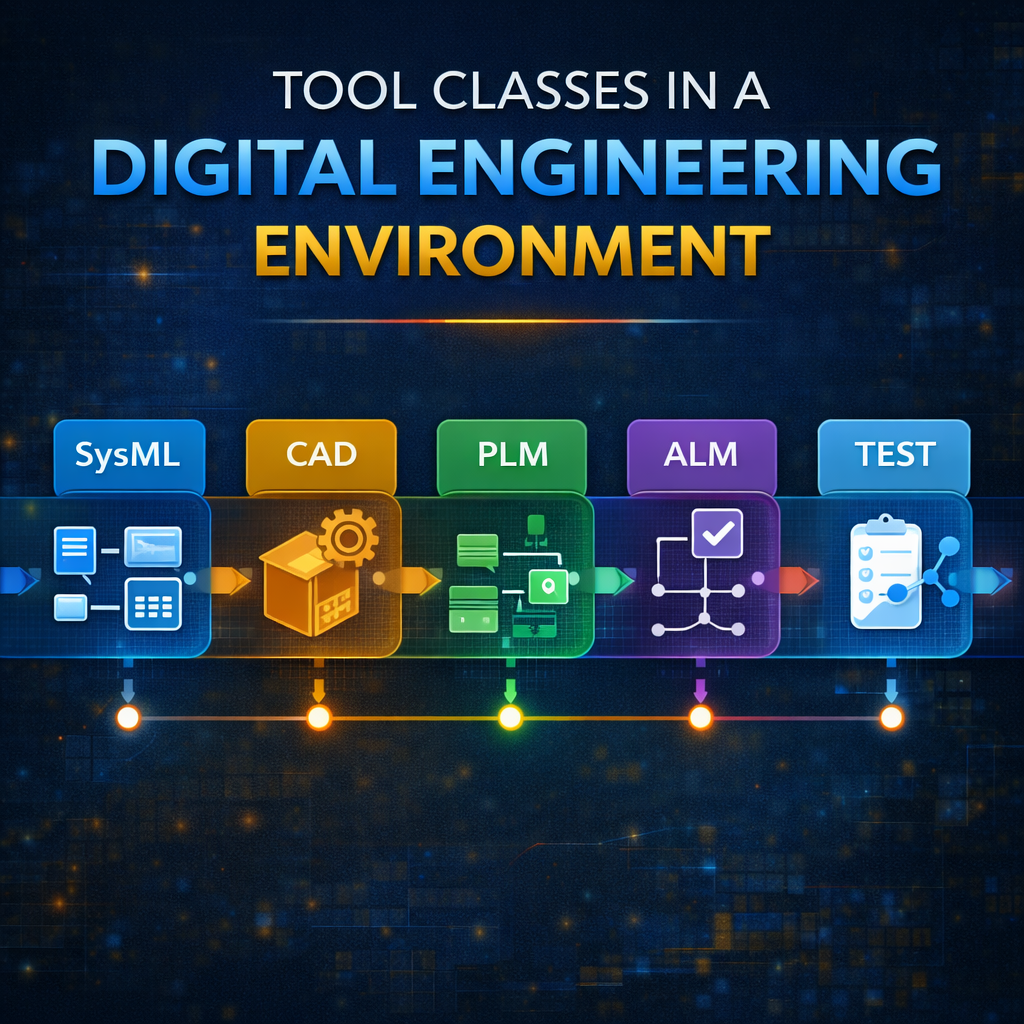
A modern Digital Engineering Environment (DEE) is composed of many different tool types that support the system lifecycle. These tools generate engineering data that should ideally be connected through a digital thread, allowing information to flow seamlessly across disciplines.
Each tool category is typically used by different engineering roles and supports different aspects of system development. Understanding how these tools fit together is essential when building a Model-Based Systems Engineering (MBSE) ecosystem.
This article provides an overview of the major tool classes used in a digital engineering environment, who typically uses them, and examples of common software platforms.
SysML Modeling Tools
Primary Users: Systems Engineers
SysML modeling tools are the backbone of Model-Based Systems Engineering. These tools allow engineers to create system models that describe requirements, behavior, structure, and parametric relationships.
The SysML model often becomes the central architecture model that connects information from many other engineering tools.
Common SysML tools include:
-
Cameo Systems Modeler / Cameo Enterprise Architect
-
MagicDraw (No Magic / Dassault Systèmes)
-
IBM Rational Rhapsody
-
Sparx Systems Enterprise Architect
-
GENESYS by Vitech
These tools are used to build models using the Systems Modeling Language (SysML) and often serve as the foundation for the digital thread across engineering disciplines.
Product Lifecycle Management (PLM) Tools
Primary Users: Engineering Management, Manufacturing, Configuration Management
PLM tools manage the lifecycle of products from design through manufacturing and sustainment. They provide configuration control, document management, and product data management across programs.
PLM systems are critical for ensuring engineering traceability and version control across the enterprise.
Examples include:
-
Siemens Teamcenter
-
PTC Windchill
-
Oracle Agile PLM
-
SolidWorks PDM
These platforms often integrate with CAD tools and engineering models to maintain the authoritative product definition.
Computer-Aided Design (CAD) Tools
Primary Users: Mechanical Engineers, Product Designers
CAD tools are used to design and visualize physical components and assemblies. These tools support the detailed engineering of mechanical parts, assemblies, and manufacturing drawings.
CAD tools support the engineering process from:
-
conceptual product design
-
detailed part modeling
-
assembly analysis
-
manufacturing documentation
Common CAD tools include:
-
Siemens NX
-
PTC Creo
-
AutoCAD
-
SolidWorks
-
CATIA
In a digital engineering ecosystem, CAD models often connect to system models and PLM systems to maintain traceability from architecture to physical implementation.
Application Lifecycle Management (ALM) Tools
Primary Users: Software Engineers, DevOps Teams
ALM tools help organizations manage software development processes and workflows. These platforms integrate project planning, issue tracking, version control, and development pipelines.
Common ALM tools include:
-
Jira
-
GitHub
-
Azure DevOps
These tools are essential for managing software development lifecycles, especially in systems where software plays a large role.
Requirements Management Tools
Primary Users: Systems Engineers, Requirements Engineers
Requirements management tools store, organize, and track system requirements throughout the system lifecycle.
These tools support activities such as:
-
requirement authoring
-
traceability
-
change management
-
verification tracking
Examples include:
-
IBM DOORS
-
IBM DOORS Next Generation (DNG)
-
Jama Connect
In a mature digital engineering environment, requirements tools integrate with SysML models and verification tools to maintain complete traceability.
Simulation and Analysis Tools
Primary Users: Systems Engineers, Controls Engineers, Analysts
Simulation tools allow engineers to analyze system behavior before physical prototypes are built. These tools support model-based analysis, algorithm development, and performance evaluation.
Examples include:
-
MATLAB
-
Simulink
Simulation models often integrate with system models through parametric diagrams and behavioral simulations.
Database and Data Management Tools
Primary Users: Software Engineers, Data Engineers, IT Teams
Database tools store and manage large volumes of engineering data generated across tools in the digital engineering environment.
Example platforms include:
-
MySQL
-
PostgreSQL
-
SQL Server
Databases are frequently used to support digital thread infrastructure and enterprise engineering data platforms.
Test Management Tools
Primary Users: Test Engineers, Quality Engineers
Test management tools help track test procedures, execution results, and verification status throughout system development.
These tools ensure that system requirements are properly validated and verified.
Examples include:
-
TestRail
Test tools often integrate with requirements management platforms and system models to provide traceability between requirements and verification results.
The Role of the Digital Thread
The real power of a digital engineering environment comes from connecting these tool classes together.
When integrated properly, these tools enable the digital thread, which links engineering data across the entire system lifecycle.
For example:
-
Requirements tools define system requirements
-
SysML models define system architecture
-
CAD tools define physical components
-
Simulation tools analyze system performance
-
Test tools verify requirements
When connected digitally, these tools allow organizations to maintain traceability from requirements to architecture to implementation and verification.
Final Thoughts
A successful digital engineering environment is not defined by a single tool. Instead, it is built from a network of integrated tool classes that support different engineering disciplines.
Understanding how these tools interact is essential for building a scalable Model-Based Systems Engineering ecosystem and enabling a true digital thread across the product lifecycle.