

What Is Digital Engineering? (And How It Relates to MBSE)

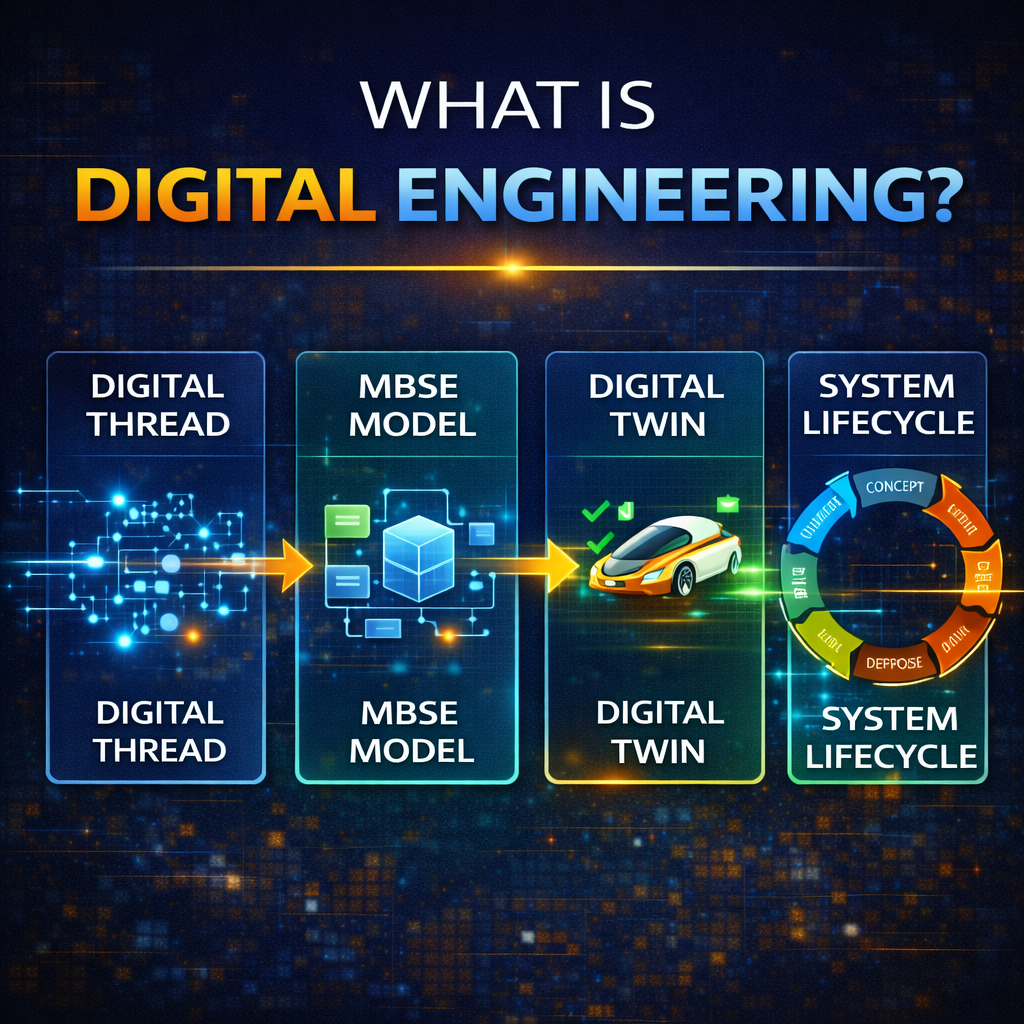
What Is Digital Engineering?
Digital engineering is the use of digital technologies, models, and data to design, develop, analyze, and manage complex systems throughout their entire lifecycle.
Instead of relying on disconnected documents and spreadsheets, digital engineering uses integrated digital models and authoritative data sources to support engineering decisions from concept development through system disposal.
Digital engineering connects engineering disciplines through shared digital information, enabling teams to collaborate more effectively and make better decisions earlier in the development process.
Industries that heavily adopt digital engineering include:
-
aerospace
-
defense
-
automotive
-
energy
-
medical devices
-
advanced manufacturing
By leveraging digital tools and connected models, organizations can improve efficiency, reduce risk, and accelerate system development.
Digital Engineering Tools and Technologies
Digital engineering environments often integrate multiple digital tools that support different engineering activities, including:
-
Computer-Aided Design (CAD) for mechanical design
-
Computer-Aided Manufacturing (CAM) for production planning
-
Product Lifecycle Management (PLM) systems for configuration management
-
Model-Based Systems Engineering (MBSE) tools for system architecture
-
simulation and analysis tools for performance evaluation
These tools work together through digital threads, enabling data to flow between models and engineering processes.
What Digital Engineering Looks Like in Practice
Digital engineering enables several important capabilities across engineering organizations.
Improved Engineering Efficiency
Digital engineering provides a consistent way to manage system design data and engineering processes across teams and programs.
Digital Thread Integration
A digital thread connects models, engineering data, and tools across the system lifecycle. This allows engineering teams to maintain traceability between requirements, architecture, analysis, and verification activities.
Virtual Design Verification
Digital engineering environments often include digital twins, which are virtual representations of physical systems.
Digital twins allow engineers to:
-
evaluate system performance
-
simulate operational scenarios
-
identify potential design issues early
This reduces the risk of discovering problems during expensive physical testing phases.
Advanced Engineering Technologies
Digital engineering environments increasingly incorporate modern technologies such as:
-
high-performance computing
-
big data analytics
-
artificial intelligence
-
autonomous systems
-
robotics
These technologies allow engineers to analyze complex systems and explore design trade spaces more effectively.
DoD Digital Engineering Strategic Goals
The U.S. Department of Defense (DoD) has defined five major strategic goals for implementing digital engineering across defense programs.
1. Formalize Model Development
Develop and integrate models that support engineering decisions across enterprise and program activities.
2. Establish an Authoritative Source of Truth (ASoT)
Maintain a trusted, authoritative digital representation of system data and models.
3. Incorporate Technological Innovation
Adopt emerging technologies that improve engineering practices and system development.
4. Build Supporting Infrastructure
Develop digital engineering environments that allow stakeholders to collaborate and exchange information.
5. Transform Workforce and Culture
Train engineers and organizations to adopt digital engineering practices across the entire lifecycle.
What Is Model-Based Systems Engineering (MBSE)?
Model-Based Systems Engineering (MBSE) is a discipline within systems engineering that uses digital models instead of traditional documents to define and analyze system architectures.
In MBSE, engineers create a unified system model that represents:
-
system structure
-
system behavior
-
requirements
-
interfaces
-
constraints
These models can be used to simulate, analyze, and optimize system performance before the system is built.
Because all information exists within a digital model, engineers can generate multiple views of the system depending on the stakeholder audience.
For example, engineers may create diagrams that show:
-
system architecture
-
operational behavior
-
requirements relationships
-
interface definitions
When the system model is properly structured, changes made in one part of the model can automatically propagate throughout the entire system representation.
This dramatically improves:
-
communication of system design
-
consistency of engineering data
-
traceability across the lifecycle
How Digital Engineering and MBSE Are Related
Digital engineering and MBSE are closely related concepts, but they are not the same.
Digital engineering is the broader engineering approach that integrates digital technologies and engineering processes across the lifecycle.
MBSE is a specific discipline within digital engineering that focuses on using models to define and analyze system architectures.
According to the Systems Engineering Body of Knowledge (SEBoK):
Model-Based Systems Engineering (MBSE) is a subset of digital engineering.
MBSE supports digital engineering by providing structured system models that connect:
-
requirements
-
architecture
-
behavior
-
verification activities
These models form the foundation of the digital thread, enabling engineering data to flow across tools and lifecycle phases.
Digital Engineering and Metadata
A key concept behind digital engineering is the use of metadata to connect engineering information.
Metadata can include elements such as:
-
hyperlinks
-
relationships between model elements
-
dependencies between system components
-
traceability links between requirements and architecture
These connections allow engineers to navigate complex system information and maintain consistency across engineering artifacts.
Final Thoughts
Digital engineering represents a major shift in how modern systems are designed and developed.
By replacing disconnected documents with connected digital models and data, engineering organizations can:
-
improve collaboration across disciplines
-
reduce design risk earlier in development
-
enable simulation and analysis of complex systems
-
accelerate system delivery timelines
Within this broader approach, Model-Based Systems Engineering (MBSE) plays a critical role by providing the structured models that represent system architectures and behavior.
Together, digital engineering and MBSE form the foundation for the next generation of data-driven engineering practices.