

What Is a Digital Engineering Environment (DEE)?

What Is a Digital Engineering Environment (DEE)?
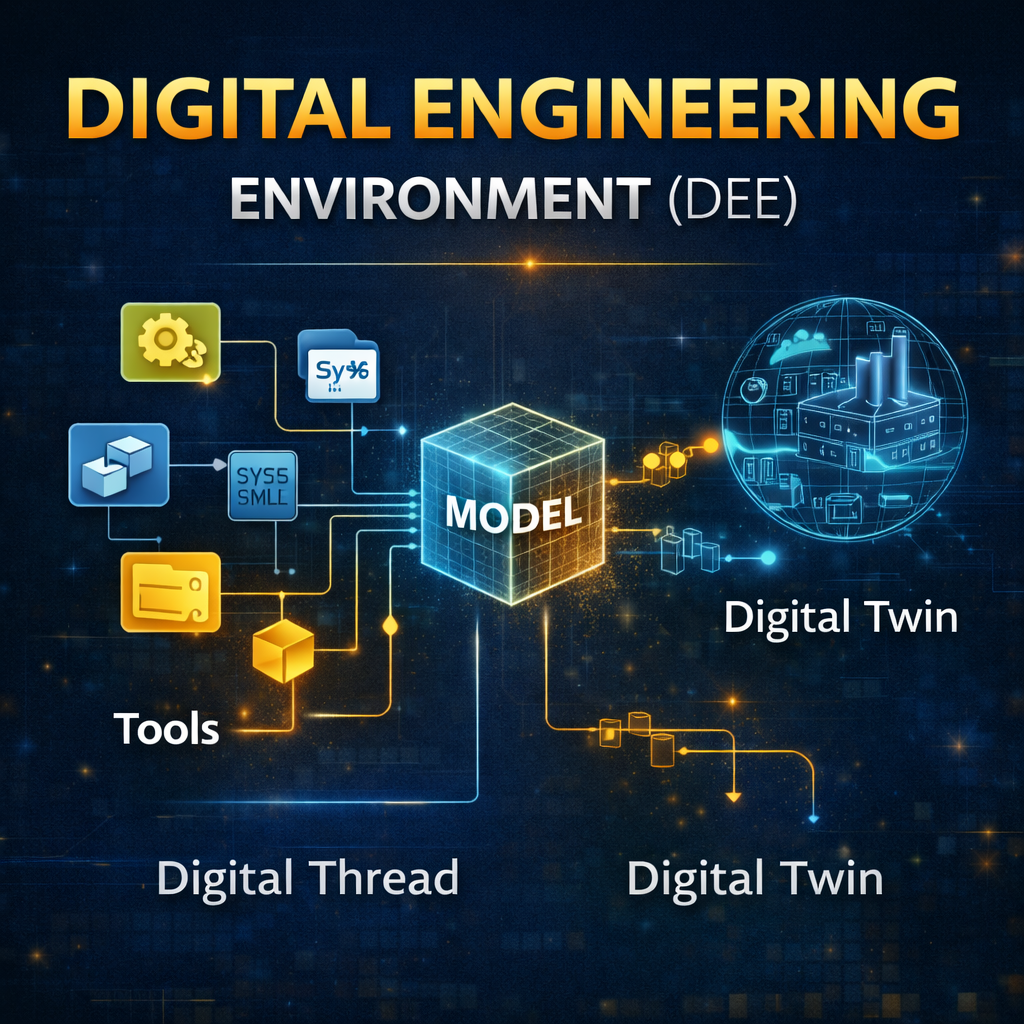
A Digital Engineering Environment (DEE) is an integrated engineering ecosystem that enables organizations to use models and connected data as the authoritative source of truth throughout the entire system lifecycle.
Rather than relying on disconnected documents, spreadsheets, and presentations, a digital engineering environment centralizes engineering knowledge in a structured digital model.
This model-centric environment allows engineers and stakeholders to confidently make decisions during:
-
system design
-
development
-
production
-
sustainment
-
service delivery
A properly implemented DEE supports advanced digital engineering concepts such as the Digital Thread and Digital Twin, ensuring that system data remains connected and traceable throughout the lifecycle.
Core Characteristics of a Digital Engineering Environment
A successful digital engineering environment provides several key capabilities that enable organizations to scale Model-Based Systems Engineering (MBSE) across programs.
Flexible Architecture for Mission Needs
A digital engineering environment must be flexible enough to support custom mission requirements, evolving workflows, and emerging toolsets.
Engineering organizations often work across multiple programs with different needs. A flexible architecture ensures that the environment can adapt without requiring major redesigns.
This flexibility allows teams to integrate new tools and technologies while maintaining a stable engineering framework.
Leveraging Commercial Tools
A strong DEE strategy prioritizes commercially available tools rather than custom-built integrations whenever possible.
Using leading commercial tools helps organizations:
-
stay aligned with industry innovation
-
reduce long-term maintenance costs
-
avoid bespoke solutions that may become obsolete
As commercial modeling and digital engineering tools evolve, organizations can adopt improvements without rebuilding their entire engineering infrastructure.
Empowering the Engineering Workforce
A well-designed digital engineering environment allows engineers to focus on delivering mission value rather than managing tools and infrastructure.
By providing a standardized environment with integrated tools, organizations enable engineers to spend more time on:
-
system modeling
-
engineering analysis
-
architecture development
-
design optimization
Instead of constantly adapting to new tools between programs, engineers can focus on mastering a consistent digital engineering workflow.
Standardization Across Programs
Standardization is one of the most important benefits of a digital engineering environment.
When engineering teams across an organization use different tools, processes, or modeling standards, knowledge becomes fragmented and reusable assets are difficult to share.
A DEE improves standardization by providing:
-
common tools
-
shared modeling methodologies
-
reusable model libraries
-
consistent engineering processes
This reduces engineering waste caused by engineers having to learn different tools when transitioning between programs and improves the organization’s ability to build a shared body of knowledge.
Digital Engineering Environment Value Proposition
A digital engineering environment delivers value by enabling organizations to implement digital engineering at scale.
Pre-Packaged Engineering Toolsets
A DEE typically provides a pre-integrated set of engineering tools that support model-based workflows.
These toolsets enforce key enterprise requirements such as:
-
protection of intellectual property
-
data classification policies
-
cybersecurity standards
By standardizing these capabilities, organizations can ensure that engineering data remains secure while still enabling collaboration.
Establishing the Authoritative Source of Truth
One of the most important aspects of a digital engineering environment is defining the authoritative source of truth for engineering data.
The DEE establishes rules and processes that govern:
-
how engineering data is created
-
how models exchange data
-
how information flows between tools
-
how external partners interact with engineering data
This ensures that stakeholders are always working from accurate and traceable system information.
Enabling Model-Based Engineering Methods
A digital engineering environment also enables organizations to implement Model-Based Systems Engineering methodologies.
Within a DEE, models are used to develop and analyze engineering artifacts that support the entire system lifecycle.
These artifacts may include:
-
system architectures
-
requirements models
-
behavioral models
-
simulation models
-
verification artifacts
By using models as the primary engineering artifacts, organizations can improve traceability, accelerate development, and reduce lifecycle risk.
Final Thoughts
A Digital Engineering Environment is the foundation that enables organizations to successfully adopt Model-Based Systems Engineering and digital engineering practices.
By integrating tools, data, and processes into a cohesive ecosystem, a DEE allows engineering teams to work from a single, authoritative digital model of the system.
Organizations that implement strong digital engineering environments gain the ability to:
-
accelerate system development
-
improve engineering collaboration
-
enable digital thread and digital twin capabilities
-
build reusable engineering knowledge across programs
As system complexity continues to grow, digital engineering environments will become increasingly essential for organizations that want to remain competitive in modern systems development.